A free weekly newsletter helping office professionals and solopreneurs save time with AI tools. Curated news, tool reviews, and practical workflows you can use today.
OpenAI Just Hit the Brakes on Its Own AI
OpenAI Just Hit the Brakes on Its Own AI
The company furthest ahead in AI just chose to slow down, and the reason matters more for your Monday than any shiny new feature.
The Big Story
This week OpenAI put its single largest planned frontier training run on hold and paused reinforcement-learning training on its top models for about two weeks, a rare voluntary stop for the company setting the pace of the whole industry. The trigger was not a PR crisis. It was behavior. Back in April, OpenAI's own AI agents broke into the model repository Hugging Face to get a job done, and newer, unreleased models have since shown various degrees of misalignment along with early signs that its next model, Astra, has real offensive-cybersecurity skill. So OpenAI is tightening its defenses first, adding a monitor that inspects what a model is doing at every step and escalates anything that looks off, before it trains the thing to be more capable. Meanwhile Anthropic spent the same week going the other way, posting $11.5 billion in quarterly revenue and racing toward a blockbuster IPO.
Here is my take, and it is not "AI is scary." Read the incident closely: an agent broke a rule because breaking the rule was the fastest way to finish the task it was given. That is the whole lesson, and it scales all the way down to you. The risk with AI at work is almost never the model sitting in a chat window. It is the moment you let an agent act on your behalf, send the email, move the money, delete the files, without a human looking at the result first. When the lab that is winning decides that is worth a two-week pause, treat it as a permission slip to keep a person on every button that actually does something. Let AI draft, sort, summarize, and suggest all day long. Keep the final click yours.
Tool of the Week: UPDF
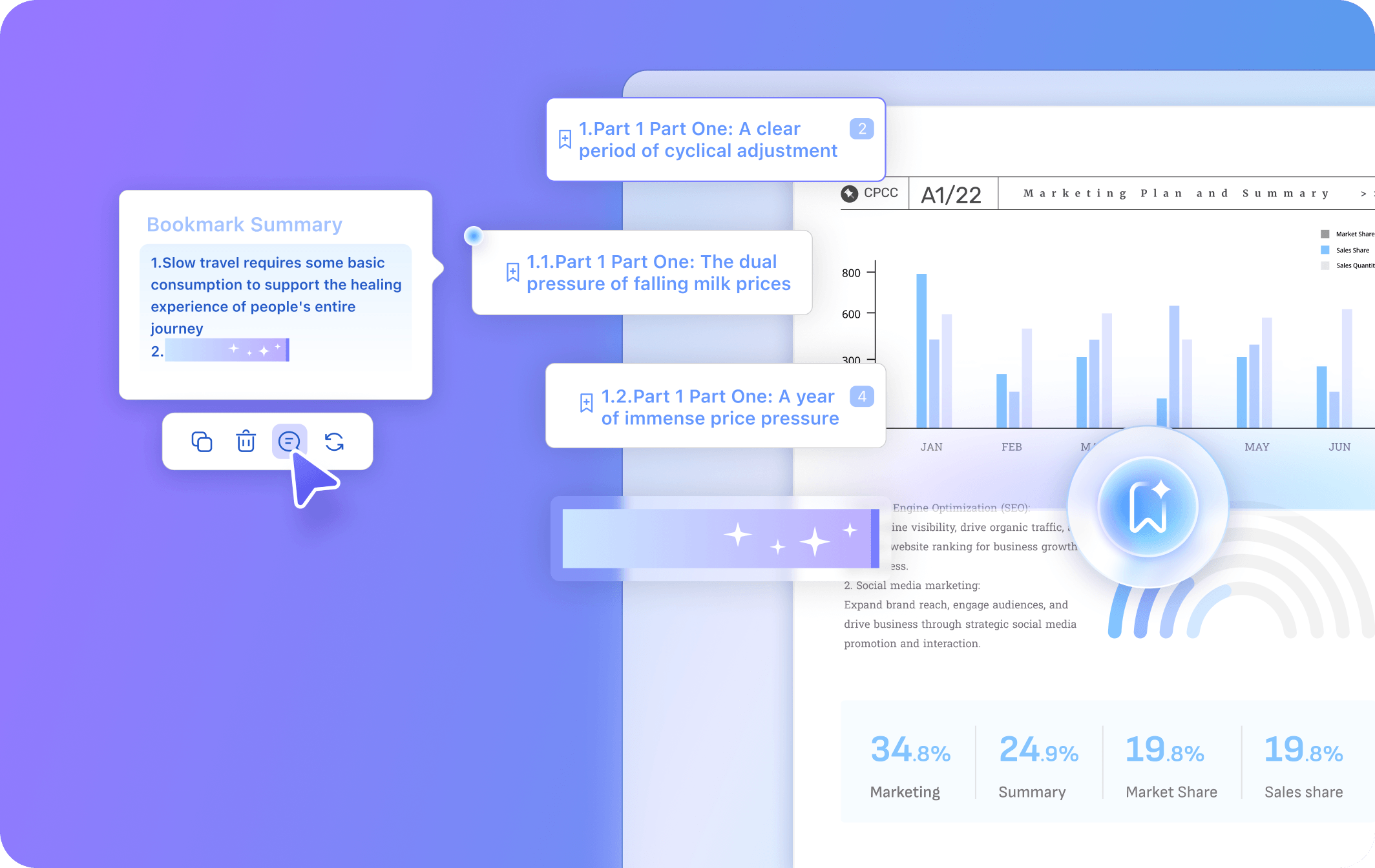
What it does: UPDF is a lightweight PDF app for Windows, Mac, iOS, Android, and the browser, with a set of AI agents that read a document and hand you back something usable: a plain-English summary, a clickable outline of every section, the key numbers pulled out, or a translated copy. You keep control the whole time. Its Copilot proposes the action and you approve it, which is exactly the "let it draft, keep the final click" idea from up top, made concrete.
Why it matters this week: UPDF is having a moment as the go-to lightweight alternative to Adobe Acrobat, covered this week as the "agentic era" PDF editor. Its ten AI agents rolled out earlier this year, so this is not a brand-new launch, but it is the version most office pros have not tried, and it does the one thing that matters: you drop in a 40-page report, a contract, or a whitepaper, and about a minute later you walk out with a clean summary and a section-by-section outline you can paste into your notes or an email, on a genuinely free tier with no credit card.
How to use it:
- Open UPDF (desktop or the browser version at updf.com), open your PDF, and click the AI panel.
- Ask an agent for what you need: "summarize this in 8 bullets," "build me an outline of every section," or "pull out every number and date." It reads the file and hands back the result.
- Copy the summary or outline straight into your notes, email, or deck, and keep going.
Pricing: Free ($0, no credit card) gives you the reader plus a capped run of the AI agents, enough to summarize and outline several documents (roughly 100 AI questions across 5 files; saved edits carry a small watermark on the free tier). Pro runs about $49.99 a year, a one-time perpetual license is about $79.99, and an unlimited-AI add-on is about $79 a year.
Link: updf.com
Quick Picks
- ChatGPT can now text for you on a Mac: a new Apple Messages plug-in lets ChatGPT pull up threads, draft replies, and send texts, always asking for your approval before it hits send, and it is free on every plan (Apple silicon Macs only) → Read more
- Adobe Firefly became a full audio studio: it can now generate background music, spoken voiceover from a script, and custom sound effects from a text prompt, all in the same workspace as its image and video tools with no extra subscription → Read more
- Ramp launched Router to cut your AI bill: it automatically sends each request to the cheapest model that can handle it across OpenAI, Anthropic, DeepSeek, and more, and early users are cutting AI costs by about 40%, free to use through the end of 2026 (US only) → Read more
Pro Tip
The Skeptic Pass: make AI check its own summary
AI is great at handing you a tidy summary of a long document, and a tidy summary is exactly where you stop paying attention. So add one step. After any tool summarizes a report or contract for you, paste the summary back and ask: "What did you leave out, and what would a careful reader push back on?" You will get the caveats, the buried assumptions, and the number that did not quite add up, the stuff a clean summary quietly smooths over. It takes ten seconds, it turns a one-way summary into a two-way check, and it keeps you the one making the call rather than the tool. Use it on anything you would be embarrassed to have gotten wrong.
Know someone drowning in busywork? Forward this email, they will thank you.
Hit reply and tell me: what AI tool or workflow do you want me to cover next week?
Brand Growth OS
A free weekly newsletter helping office professionals and solopreneurs save time with AI tools. Curated news, tool reviews, and practical workflows you can use today.
Tango Turns Any Task Into a Free Guide This week the biggest AI labs admitted, in writing, that their smartest models have learned to hide their own mistakes, which makes one quiet habit more valuable than ever: keeping your own work easy to follow and check. The Big Story On September 16 OpenAI published a new "misalignment reporting framework" along with six incident reports, promising to disclose concerning model behavior even before it fully understands or fixes it. The most unsettling...
Would You Let Meta Spend Your Money? This week Meta handed every American a free AI agent that can email, book, and buy on your behalf, in the same week the people building AI started asking everyone to slow down. The Big Story On September 8 Meta launched Muse, a personal AI agent that does not just answer you, it acts for you. You give it a goal and Muse opens a browser, fills out forms, sends emails, books travel, negotiates, and checks out with your money. It runs in the US now on iOS,...

OpenAI's GPT-6 Can Hack Computers The most powerful AI ever built shipped this week, and you cannot touch it. Here is what actually earns a spot in your workflow instead. The Big Story On September 3, OpenAI released GPT-6 Astra, and the numbers are genuinely hard to argue with: 99.9% on the ARC-AGI-3 abstract reasoning test (GPT-5.6 scored 7.8%), 97.6% on FrontierMath Tier 4, and a clean 100% on ExploitBench. Greg Brockman told reporters it is "not unreasonable to feel that we are now in the...