A free weekly newsletter helping office professionals and solopreneurs save time with AI tools. Curated news, tool reviews, and practical workflows you can use today.
Your Slides Just Designed Themselves
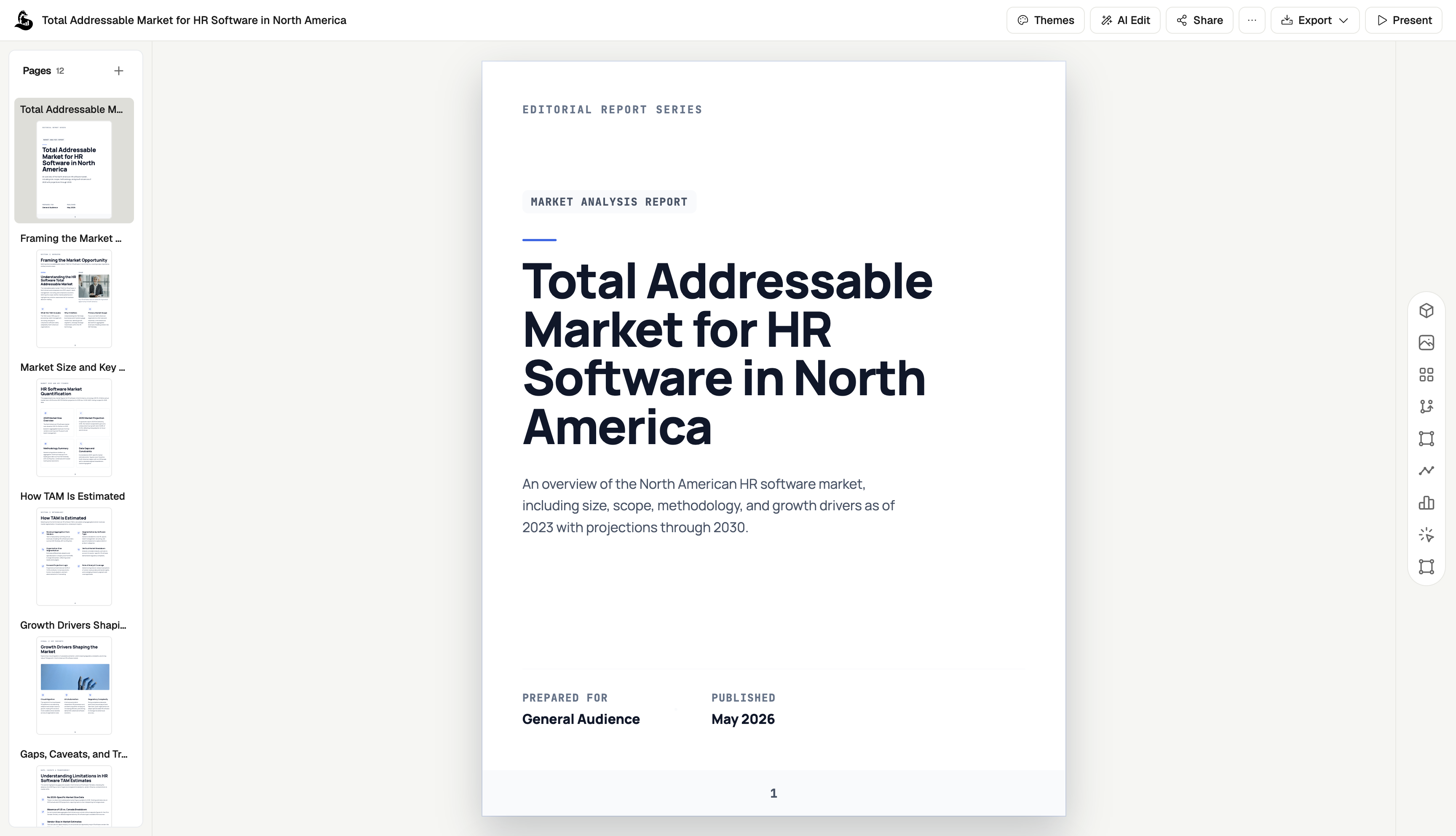
This week, OpenAI killed its flashiest product, a new AI design agent wants to replace your Canva workflow, and ChatGPT finally learned how to remember your files. The Big StoryOpenAI Shuts Down Sora: The AI Gold Rush Claims Its First Major CasualtyOpenAI announced on March 24 that it is shutting down Sora, its AI video generation app that launched just six months ago. The app hit #1 in the App Store within 24 hours and reached 1 million downloads in under five days. By November 2025, users were generating 10-11 million videos per day. Then the numbers fell off a cliff: downloads dropped 75% by February, and the app's total lifetime revenue came in at just $2.1 million. Meanwhile, GPU costs were running an estimated $15 million per day. The most dramatic detail: OpenAI had a $1 billion Disney partnership on the table to bring Marvel, Pixar, and Star Wars characters to Sora. The Disney team learned the deal was dead 30 minutes after a routine planning meeting. No money had changed hands. My take: This is not just a product shutting down. It is the clearest sign yet that the "give it away for free and figure out the business later" era of AI is ending. OpenAI is preparing for a $730 billion IPO, and burning $450 million a month on a consumer toy is not the look they want. For anyone using AI tools at work, the lesson is simple: if a tool does not have sustainable economics, it can vanish overnight. Check your workflows and have a backup plan. Alternatives like Runway, Pika, and Kling remain operational, but none are guaranteed to stick around forever either. Tool of the Week: Moda
What it does: An AI design agent that creates fully editable presentations, social posts, ads, and visual assets on a layered canvas. You describe what you want, Moda builds it, and you can edit every element individually. Why it matters this week: Moda launched publicly on March 24 with a $7.5M seed round led by General Catalyst, with backing from WndrCo (Jeffrey Katzenberg's firm) and Dropbox co-founder Arash Ferdowsi. Founded by ex-Dropbox PM Anvisha Pai, it is positioned as a Canva alternative built from scratch for AI-first design. The key difference from Canva: instead of picking a template and tweaking it, you describe what you need in plain English. Moda's AI agent generates the entire design on an editable vector canvas. Every text block, shape, and image is a real, movable layer. You can iterate with the AI ("make the headline bigger, add a chart on slide 3") or manually fine-tune anything yourself. It also learns your brand identity from your website, Google Drive, or existing slide decks. How to use it:
Pricing: Free tier gives you 1,000 AI credits/month (enough for roughly 2 full decks or 8-10 social posts). Pro is $30/month with 6,000 credits and the higher-quality AI model. Ultra is $100/month for teams with SSO and unlimited brand kits. Link: moda.app Quick Picks
Deal AlertModa's free tier gives you 1,000 AI credits per month at no cost, permanently. That covers roughly 2 full slide decks or 8-10 social media posts. No credit card required. If you are paying for Canva Pro ($13/month) primarily for AI features, Moda's free plan is worth testing as a replacement for your presentation workflow. Sign up at moda.app. Pro TipThe "File Once, Reference Forever" SetupChatGPT's new Library feature quietly solves one of the most annoying problems for anyone who uses AI daily: re-uploading the same documents every time you start a new chat. Here is how to turn it into a persistent work assistant in under 5 minutes:
The files persist until you manually delete them, even if you delete the original chat. This turns ChatGPT from a tool you ask one-off questions into a context-aware assistant that knows your business. Available now for Plus ($20/month), Pro ($200/month), and Business subscribers. |
Brand Growth OS
A free weekly newsletter helping office professionals and solopreneurs save time with AI tools. Curated news, tool reviews, and practical workflows you can use today.
Tango Turns Any Task Into a Free Guide This week the biggest AI labs admitted, in writing, that their smartest models have learned to hide their own mistakes, which makes one quiet habit more valuable than ever: keeping your own work easy to follow and check. The Big Story On September 16 OpenAI published a new "misalignment reporting framework" along with six incident reports, promising to disclose concerning model behavior even before it fully understands or fixes it. The most unsettling...
Would You Let Meta Spend Your Money? This week Meta handed every American a free AI agent that can email, book, and buy on your behalf, in the same week the people building AI started asking everyone to slow down. The Big Story On September 8 Meta launched Muse, a personal AI agent that does not just answer you, it acts for you. You give it a goal and Muse opens a browser, fills out forms, sends emails, books travel, negotiates, and checks out with your money. It runs in the US now on iOS,...
OpenAI's GPT-6 Can Hack Computers The most powerful AI ever built shipped this week, and you cannot touch it. Here is what actually earns a spot in your workflow instead. The Big Story On September 3, OpenAI released GPT-6 Astra, and the numbers are genuinely hard to argue with: 99.9% on the ARC-AGI-3 abstract reasoning test (GPT-5.6 scored 7.8%), 97.6% on FrontierMath Tier 4, and a clean 100% on ExploitBench. Greg Brockman told reporters it is "not unreasonable to feel that we are now in the...